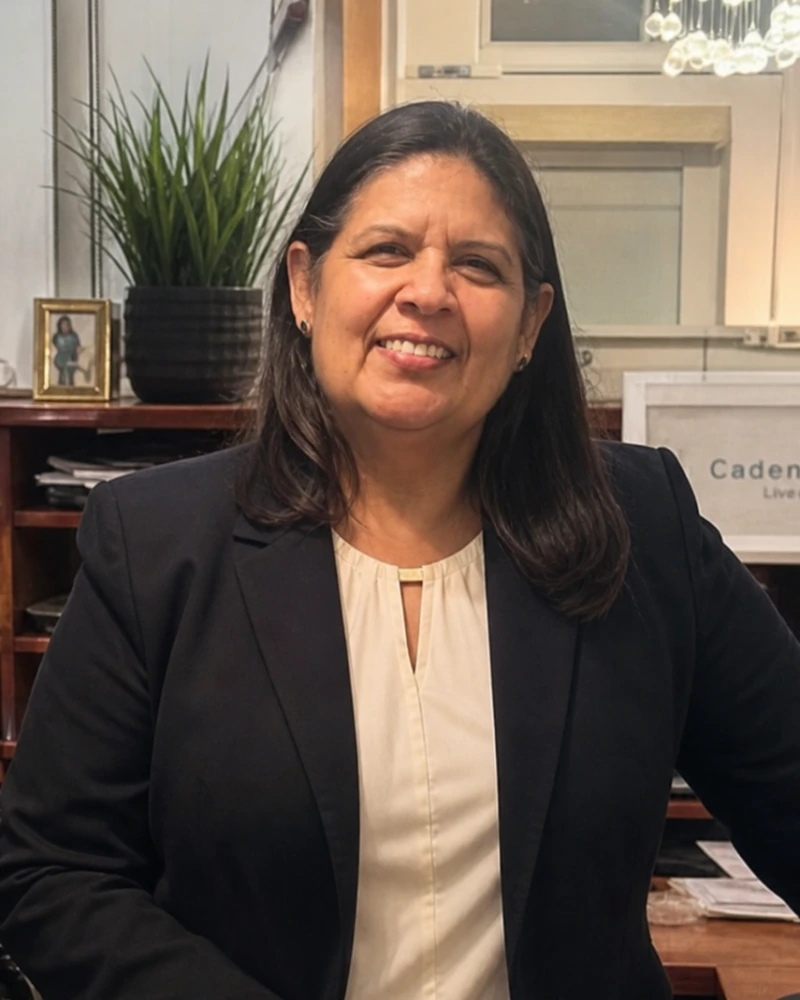
Families ask me, on every tour, some version of the same question: what is a day actually like here? Brochures don't answer that question. Websites don't either. So here is a Tuesday (an ordinary Tuesday at our Silver Spring home) from the moment I come downstairs to start the coffee to the handoff to our awake overnight caregiver. Five residents, one table, one house. This is what I want you to picture when you think about whether your mother or father could live well with us. The residents described below are illustrative composites drawn from years of care. The small details are true to how we work, but no one here is a specific, identifiable person.
The best time to tour is breakfast. That's when a home shows you who it is. - Nimmi Perera, Owner of Bright Hands Assisted Living
6:30 AM: Morning Care & Meds
I start the morning pot of coffee on the way to the med cart. It's the first thing I do, every day, the smell wakes up the house the way nothing else does, and it tells the residents who are early risers that the day has begun without anyone having to knock on a door. I'm the owner and care manager here, and I live on-site, so by 6:30 I've already had ten minutes with the overnight caregiver going over the night. Who slept. Who didn't. Who was up twice for the bathroom, who asked for a second blanket, whether anyone's morning pills need to be brought to the bedroom because they're still asleep.
The 7:00 AM med pass is the biggest one of the day. Thyroid on empty stomachs, a Parkinson's med that has to be down sixty minutes before breakfast, the blood-pressure routine, a couple of eye drops, an inhaler. I pull each dose from its blister card, read the name on the card against the name on the MAR log, check the time, check the dose, and only then hand it over with water. The MAR, the Medication Administration Record, gets initialed the moment the medication is swallowed, not before. It's the second check. In a home licensed at Level 3 under our OHCQ license, that double-check is the protocol. For residents who need help with dressing or a trip to the bathroom, I help them before the pills. For residents who still like to sleep in, and several do, I let them. The day comes to them when they're ready.
8:00 AM: Breakfast Together
Breakfast is family-style. One table, one kitchen, the smell of eggs and toast and a little bit of bacon grease on a Tuesday. I cook it, here, while the residents drift in as they wake up. Eggs to order. Oatmeal for the two who prefer it, with a little brown sugar and cinnamon stirred in. A bowl of fruit in the middle of the table. Toast with butter or jam, and a small plate of sliced tomato for the resident who has eaten a sliced tomato with breakfast every morning of her adult life and is not going to start doing anything different now.
The blue cup belongs to Mrs. R. She has her tea in the blue cup. The brown-striped mug is for the gentleman down the hall who takes his coffee black with exactly one spoon of sugar, stirred clockwise because that's how his wife used to do it. These are the small recognitions that tell a person they are at home. Conversation is usually about the day ahead, what's the weather, whose grandson is visiting this weekend, whether the daffodils are up in the back yard yet. Breakfast is also where I look each resident over in good light. Color, appetite, mood, grip on the fork. A lot of what nurses call "assessment" in a hospital looks, in a small home, like sitting down to eat with someone.
10:00 AM: Morning Activity
Mid-morning is activity time, and what that looks like depends on the day of the week and, honestly, on the mood of the room. Tuesdays we do music-and-movement, gentle seated exercises to the kinds of songs our residents grew up with. Patsy Cline, Johnny Mathis, the Platters, a little Ella Fitzgerald. Wednesdays are memory work: a theme, some old photographs, a few tactile objects (a rolling pin, a Sears catalog, a box of matchbooks) that call up stories. Thursdays, if the weather is mild, we take a slow walk on our quiet cul-de-sac; our Silver Spring block is flat and shaded, which is more useful at 90 than you'd think. Fridays we bake.
Here is the thing scale does for you. With five residents, I don't have to run a program for "the dementia wing" or "the independent wing." I run it for the five people in this room, today. If two of our five are tired because yesterday was a cardiology appointment, we dim the lights, put on a record, and call that the activity. A larger facility has to schedule. A small home gets to respond. That's the difference most families don't feel until they see it, which is why I tell them to come visit at 10 AM on a Tuesday if breakfast is too early. The morning activity is the second place a home tells you who it is.
12:00 PM: Lunch & Social Hour
Lunch is our hot meal, and it is almost always the highlight of the day. I'm Sri Lankan, which means some days the house smells like curry leaves and coconut milk, a mild chicken curry with rice, or dhal with a gentle tempering of mustard seed that the residents have, over the months, come to love and ask for by name. Other days it's a roast chicken with potatoes, a meatloaf with gravy, a baked mac-and-cheese, a pot of vegetable soup with a grilled cheese on the side. Comfort food, always seasoned carefully: low salt for the heart-healthy diets, texture-modified plates for the residents who need them, cultural preferences honored for everyone. Everything I cook is on-site, from scratch, in the same kitchen where I make my own family's dinner. That's what our all-inclusive rate is actually paying for: a real pot on a real stove.
The noon med pass happens while lunch is being plated. Same protocol as the morning: pull from the blister card, check the MAR, hand over with water, initial. With noon meds there's a second layer. Many of them are taken with food, which means the timing has to match the plate, not the clock. After lunch we sit a little longer. Coffee. A piece of fruit. Conversation that drifts, because there's no dining-room shift to clear us out for the next seating.
2:00 PM: Rest & Free Time
The early afternoon at Bright Hands is quiet on purpose. Some residents nap, one reliably, in her own bed, under a blanket her daughter-in-law quilted for her; another dozes in the living-room recliner with the TV on low, which is how he has napped for sixty years and is not about to change. A couple of our residents read on the sunporch when the light is good, and one of them watches the birds at the feeder we keep stocked just outside the window. If anyone has family dropping in, this is often when they come, a daughter on her lunch break, a grandson between classes at the community college. We don't schedule visits; the door is the door.
The quiet is also when I get the administrative side of the day done. This is when I return the primary-care office's call about a medication change, fax a form to the cardiologist, phone a family member with an update, order supplies (briefs, wipes, gloves, the specific body wash one of our residents has used since 1987), and review charts. It's the hour of the day when the house looks like it is doing nothing and is actually doing the most important part of my job: keeping every thread of every resident's care in one person's hands.
4:00 PM: Afternoon Activity or Visitors
By four the house wakes up again. If it's a baking day, the smell of butter and sugar from the kitchen is what calls the residents back to the table. We've made oatmeal-raisin cookies, apple-cinnamon muffins, a lemon pound cake that one of our families requested because it was her mother's recipe. Other afternoons we do a jigsaw puzzle spread out on the dining table, or a round of rummy, or a resident FaceTimes with grandchildren in Oregon or Texas and I hold the iPad at the right angle because the buttons are too small for her hands now.
Visitors are welcome any time. We don't run set visiting hours, and we never have. Families come when life lets them come: a son after work, a granddaughter with a newborn on a Saturday morning, a sister-in-law dropping off a tray of baklava from a family wedding. I've had a visitor show up at 8 PM carrying a casserole dish because her mother "always used to love the neighbor's tuna noodle" and wanted her to taste it again. The answer to that is yes. The answer is almost always yes.
6:00 PM: Dinner
Dinner is lighter than lunch on purpose. Older adults tend to eat less in the evening, and a heavy meal close to bedtime makes reflux and poor sleep more likely. So dinner is often soup and a sandwich (a chicken-noodle or a tomato-basil, a turkey-and-cheese or an egg salad on soft bread), or a small casserole, a bowl of leftover pasta, a plate of scrambled eggs with toast for the resident who decides, three nights a week, that what she really wants is breakfast-for-dinner. The pace at dinner is slower than at lunch. Nobody is rushing anywhere. There is coffee or tea after, and dessert if the day has earned one, which, honestly, most days do.
Dinner is also when we check in with each resident about how they're feeling, in the way you'd ask a family member at the end of a long day. Any aches? Sleeping okay lately? The knee bothering you today? Half of good senior care is catching a small thing on a Tuesday evening so it doesn't become a big thing by Friday morning, and those catches almost always come up over a plate of soup.
8:00 PM: Evening Wind-Down
The evening med pass is at 8 PM for most of our residents and 9 for one. Same routine, same MAR, same double-check, now with the bedtime meds added in: a statin, an anti-anxiety medication for the resident whose sundowning gets worse without it, a stool softener, a sleep aid for the one resident whose sleep has never recovered from her husband's death and who is honest with me about needing the help. I help the residents who want help getting ready for bed: unbuttoning a cardigan, getting into a nightgown, brushing out long hair, helping with a last trip to the bathroom.
Some residents head to their rooms by 8:30. Others like to sit in the living room with the TV on low or a book in their lap until 9 or 10, and that's fine. There's no curfew. This is their home. I finish the day with a last walk through the house (checking doors, turning down lights, making sure the call bells are within reach of every bed), and then I brief the overnight caregiver on anything from today that matters for tonight.
Overnight: The Awake Caregiver
Here is the part most families don't see on a tour, and it is the part I think about most when I think about why we built Bright Hands the way we built it. From around 10 PM to 7 AM, we have an awake overnight caregiver in the house: a trained nursing assistant (not a nurse), awake and on the floor, sitting in the common area, reading, doing a crossword, listening. That person does hourly rounds, a quiet look in each doorway to check breathing and position, answers call bells immediately, helps with the bathroom trips that happen in every older body at 2 AM, repositions residents who need it to prevent pressure injuries, and sits with anyone who wakes up disoriented or anxious.
Contrast that with the standard at most larger facilities, where "24/7 staffing" means one or two aides assigned to twenty or thirty residents on an overnight shift, often with a nurse supervisor who is on-call from home. In that model, a call bell at 3 AM can wait fifteen minutes. In our model, it waits under a minute, because the caregiver is already in the room next door. Our overnight protocol is written down, and the caregiver follows it rather than making a medical judgment call alone: 911 for stroke or cardiac signs or uncontrolled bleeding; the on-call primary-care line for anything non-emergent that can't wait until morning; a call to the family for anything that involves a 911 or a change in status. And because I live on-site, I am woken for any 911 call or family notification. The residents sleep; someone is awake. That's the quietest part of what Bright Hands is, and in some ways the most important.
A day at Bright Hands is five meals at one table, one caregiver who knows your preferences, one license hanging on the wall, and one set of hands, mine, that hands you your morning pills and says good night to you at the same hour every day. If you've read this far, the next thing I'd ask you to do is come see it. pick a tour time, ideally at breakfast, and watch the house work. You'll know within twenty minutes whether it's the right home for your mother or father. That's what I want. An easy, honest decision, either way.
Frequently Asked Questions
Can residents sleep in?
Yes. We don't wake anyone for breakfast; residents come down when they wake up. The only exception is early-morning meds that have to be taken on a schedule, in that case a caregiver brings them to the room.
Are meals family-style?
Yes. We eat at one table, together, whenever residents are able to join. Meals are cooked on-site, no warming trays from a central kitchen. Residents with texture-modified diets or cultural preferences are accommodated.
Can families visit any time?
Yes. We don't have fixed visiting hours. Lunch and late afternoon tend to work best because residents are their liveliest, but evenings and weekends are fine too. Please call ahead only if you're bringing more than two visitors at once, so we can make sure there's room at the table.
Is there a set activity schedule, or is it flexible?
Both. We have a weekly rhythm (music, memory work, outdoor walks, baking), but with 5 residents we read the room. If everyone's tired after a morning doctor's visit, we swap the afternoon activity for quiet time. That's the small-home advantage.
What happens if a resident needs urgent care at 3 AM?
Our awake overnight caregiver (a trained nursing assistant, not a nurse) responds immediately, checks on the resident, and follows a written protocol: 911 for stroke or heart-attack signs or uncontrolled bleeding; call the on-call primary-care line for non-emergent concerns; call the family. The owner lives on-site and is woken for any 911 call or family notification.